Introduction
Correspondent banking runs on one document. Before a bank opens or reviews an account for another bank, it asks for the Wolfsberg Group’s Correspondent Banking Due Diligence Questionnaire (CBDDQ): the respondent’s own answers on its ownership, its anti-money laundering, counter-terrorist financing and sanctions programme, its anti-bribery controls and its know-your-customer (KYC) and transaction monitoring, signed off in a declaration by two of its senior officers.
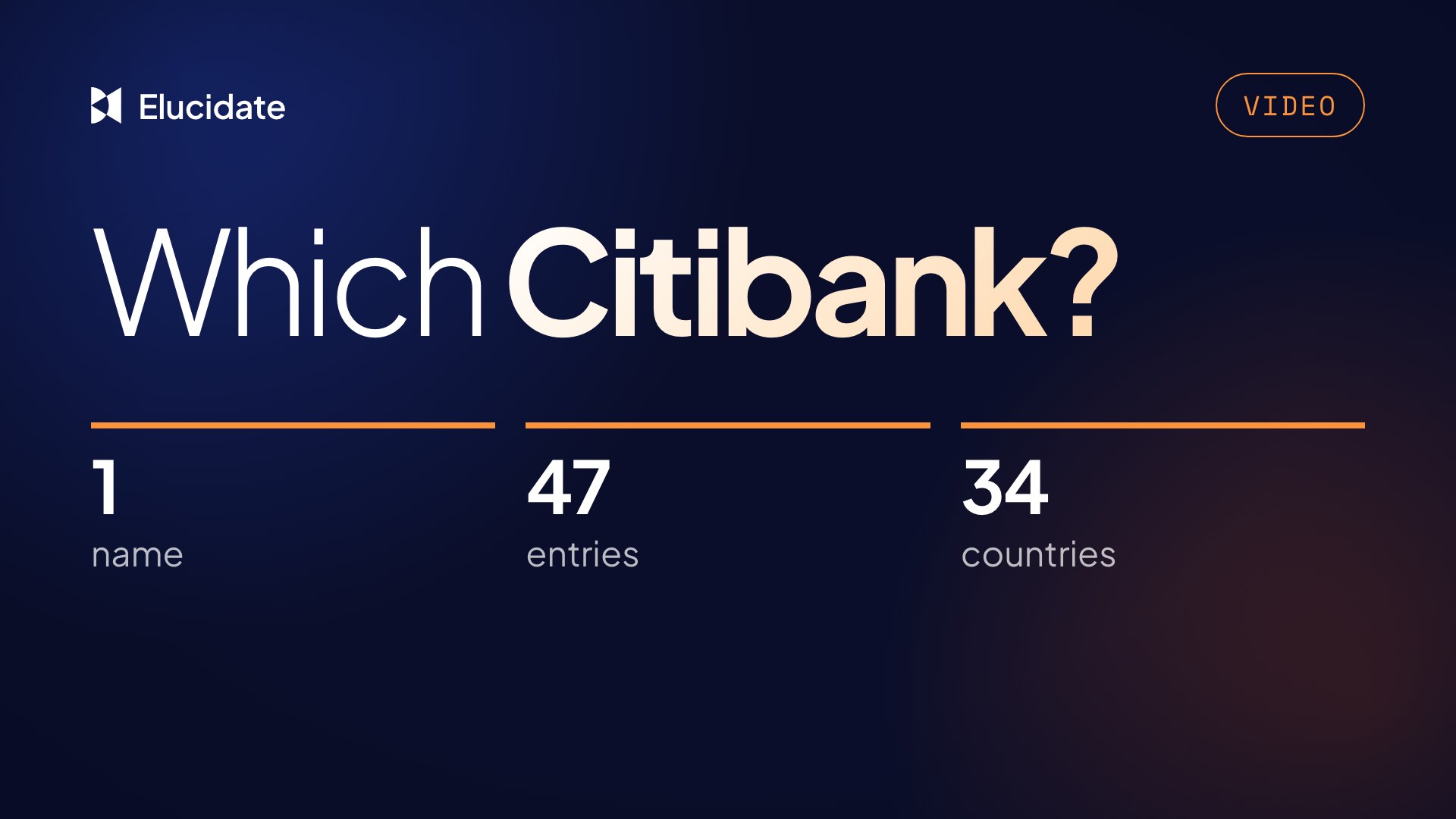
An institution that keeps its answers to itself sends them to every correspondent that asks. Some publish the completed questionnaire on their own website instead, where any correspondent can read it before asking. We wanted to know how many do. On 1 November 2026 we checked the websites of the 1,790 legal entities in the Elucidate Bank & Firm Directory that have a researched profile. The video shows what we found.
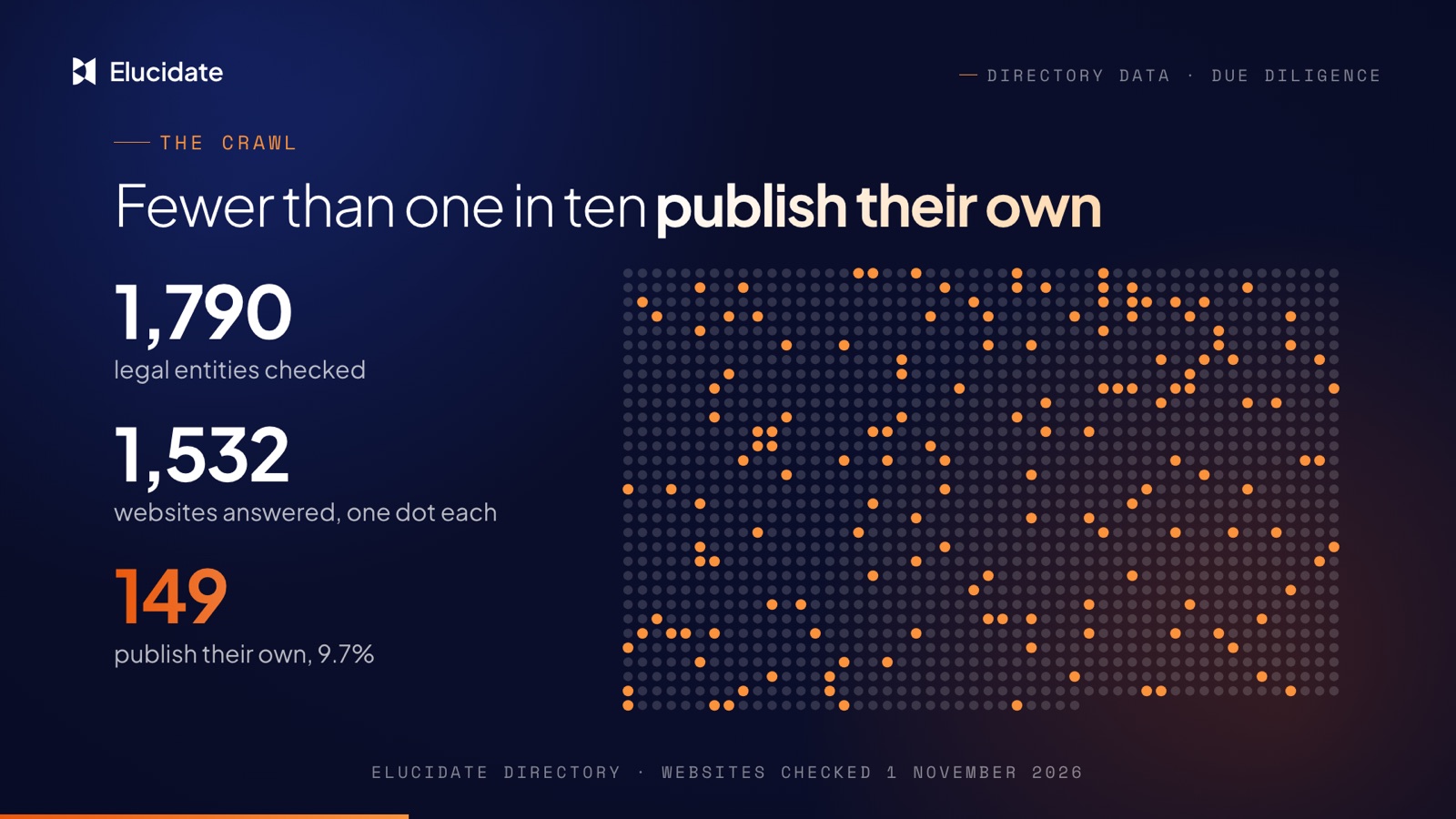
Fewer than one in ten publish their own
Of the 1,790 websites, 1,532 answered. On 149 of them—9.7%—we found a completed CBDDQ that the institution publishes as its own, rather than a file shared across a group. The 149 are in 51 countries, led by Germany (18), France (12), Italy (12) and the United States (9).
A low rate is not a finding against anyone. There can be good reasons to share answers only on request, such as knowing who is reading them. But every unpublished questionnaire is one more email, one more request queue and one more version of the same answers in circulation.
Published is not the same as current
The questionnaire carries its own expiry. In the declaration of the current version, v1.4 (published by the Wolfsberg Group on 10 February 2023), the institution commits to update its answers at least every 18 months. So a published CBDDQ is only as useful as its signing date.
We could read a signing date from 25 of the 149 questionnaires. Twenty were signed in the 18 months before our check; five were signed earlier, so their next update had passed. Of the other 124, 84 are scanned copies, which our crawler does not read, and 40 are readable files in which we found no signing date. Where the version could be read, 39 were v1.4, nine v1.2 and one v1.3.
For a correspondent, that is the useful distinction. A questionnaire signed last spring can be read as current. One signed three years ago, or one whose date cannot be found, starts a request for an update—published or not.
Read it critically
A published questionnaire is still a self-assessment. The answers are the institution’s own, and we have not reviewed or verified them. As our post on internal inconsistencies in the CBDDQ explains, a questionnaire can contradict itself in ways that a line-by-line review misses—and contradictions are where risk tends to hide.
Publishing does not make the answers true. It makes them available, dated and comparable, which is where scrutiny starts.
Where Elucidate can help
Every questionnaire we found is listed on our Wolfsberg CBDDQ page, with its version, signing date and next update due, and linked at the institution’s own website. Each one also appears on the institution’s page in the directory. The directory stays free.
A questionnaire tells you what an institution says about its controls. For banks and payment firms that need an independent view, the Elucidate FinCrime Index (EFI) scores the financial crime risk of banks and payment firms—comparable to a credit risk rating, applied to financial crime.
The best questionnaire is the one you do not have to ask for. The next best is the one that tells you when it was signed.